After the Final Whistle, Arlington's World Cup Legacy Lives On
Published on July 22, 2026
By Cynthia Lemus, Office of Communication
The final whistle has blown on the FIFA World Cup 2026™ in Arlington, but the tournament’s impact will continue to shape The American Dream City for years to come.
After hosting nine matches and welcoming visitors from around the world, Arlington emerged from one of the largest sporting events in its history with more than memories. From new community spaces and infrastructure improvements to record-breaking hotel revenue and new economic opportunities, the World Cup helped create a lasting legacy for residents.
Among the most visible reminders is the Texan Golden Boot Sculpture, a permanent landmark commemorating Arlington’s role in the historic tournament. Other legacy efforts, including a new community mini-pitch at George Stevens Park, and tree plantings and environmental initiatives, were designed to provide benefits that extend well beyond the tournament.
Arlington also completed infrastructure improvements in and around the Entertainment District as the city prepared to welcome hundreds of thousands of fans. Those investments helped support World Cup operations while strengthening the city’s ability to host major events and serve residents in the future.
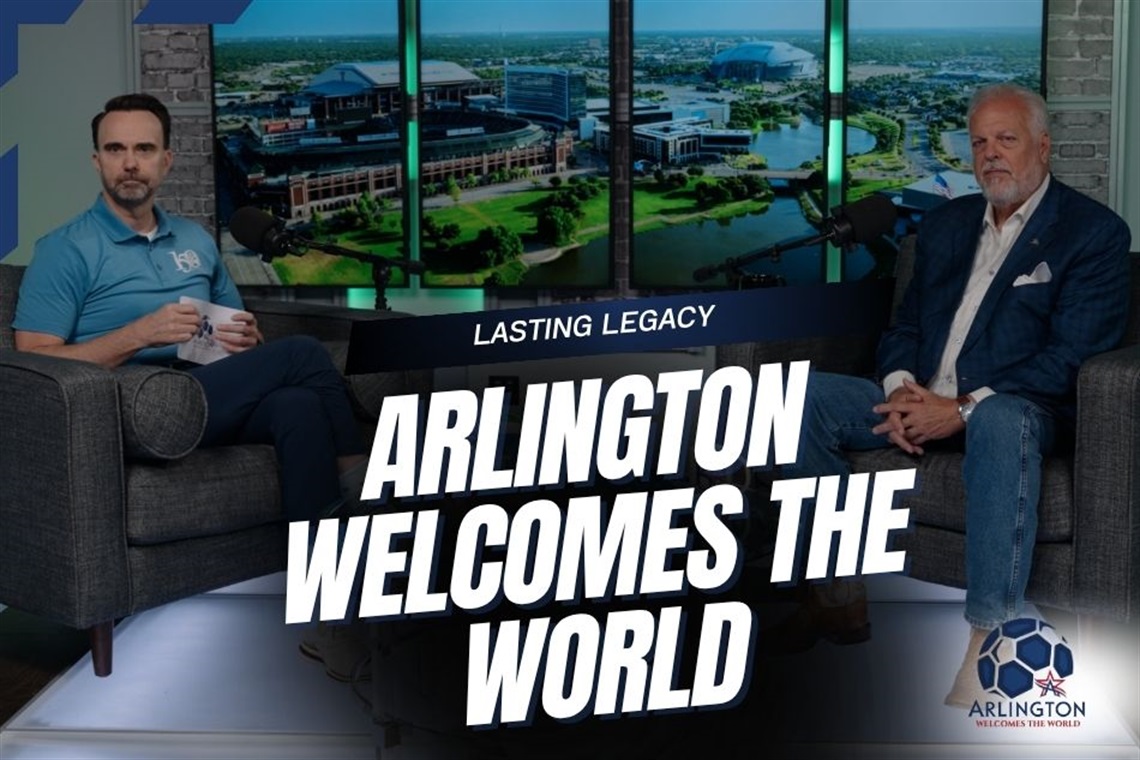
“It’s a lasting legacy to remind everybody about what we went through, what we accomplished and where we’re going,” Arlington Mayor Jim Ross said. “This is about momentum.”
A Major Economic Impact
Preliminary figures from the Arlington Convention & Visitors Bureau show the World Cup also delivered a significant economic boost.
Arlington hotels generated a record $31.5 million in room revenue in June 2026, surpassing the previous monthly record of $23.6 million set in November 2024.
The city also set a new single-night hotel room revenue record on June 17, when hotels generated $2.17 million during the England-Croatia group stage match. June 28, the night of the Jordan-Argentina match, also ranked among the top five hotel revenue nights in Arlington history, generating $2.1 million.
Using an economic impact calculator developed by Destinations International, the Arlington Convention & Visitors Bureau estimates each of the first six World Cup matches generated between $18 million and $24 million in economic impact within Arlington.
"The Financial impact for the businesses is tremendous" Ross said, “Ultimately, we all get the push from it because the rising tide lifts all ships type of scenario. And that’s really what’s going on here when you’re bringing that many people in there, when you’re elevating all that traffic. Even if the business doesn’t see a specific direct impact on things immediately, I think ultimately it helps everybody.”
Ross also mentioned that preliminary estimates put the tournament’s overall economic impact in Arlington at roughly $160 million — an extraordinary amount of economic activity generated in a matter of weeks.
“If we had $160 million impact in this 30-day period, that’s about 50 percent of our annual impact in a 30-day period,” Ross said, comparing the preliminary World Cup estimate with the roughly $324 million in annual economic impact he said AT&T Stadium generates.
The impact could extend far beyond immediate visitor spending. Successfully hosting nine World Cup matches showcased Arlington’s ability to manage events on a global scale, strengthening the city’s position to attract future sporting events, entertainment, tourism and business investment.
“I think it puts us on the map, not just in Texas, not just in the United States, but in the world,” Ross said.
The World Cup may be over, but its legacy remains — in community spaces residents can enjoy, infrastructure built for the future, new economic opportunities and a global spotlight that showed millions of people what Arlington can accomplish.
For Arlington, hosting the world was not just about nine matches. It was an investment in what comes next.